Published by the Applemint Dental Spa team
A chipped front tooth, a small gap or a tooth that looks a little shorter than its neighbors can draw your eye every time you smile. Two of the most common ways to fix these concerns are porcelain veneers and composite bonding. Both are tooth-colored and both can look natural, but they are made differently, last differently and suit different goals.
This guide walks through how each one works, where each one shines and the questions worth asking before you decide.
What Porcelain Veneers Are
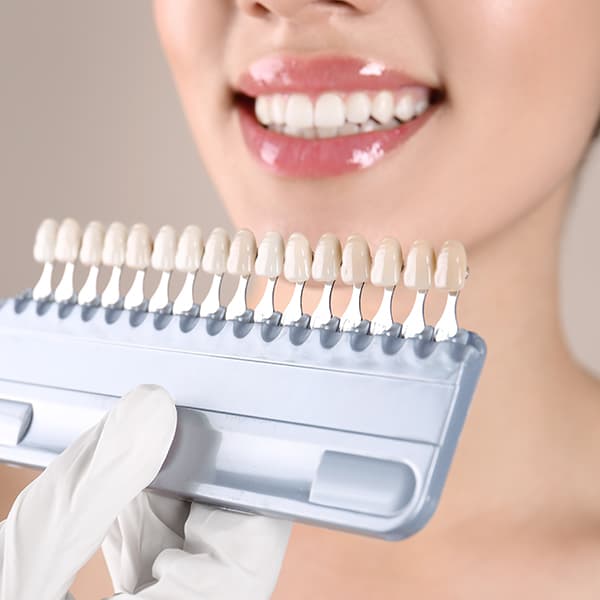
Porcelain veneers are thin, custom-made ceramic shells bonded to the front of your teeth. They are crafted in a dental laboratory to a design your dentist plans around your face, your bite and the look you want. Because porcelain reflects light much like natural enamel, well-designed veneers can look remarkably lifelike.
Placing traditional porcelain veneers usually means removing a thin layer of enamel so the veneer sits naturally. That makes treatment generally not reversible, since the tooth will always need some kind of covering afterward. Minimal-preparation options, such as Lumineers, can often be placed with little or no reshaping when the change you want is small.
What Composite Bonding Is
Composite bonding uses tooth-colored resin that your dentist shapes and hardens directly on your tooth, usually in a single visit. It is often used to repair a single chip, close a small gap or smooth out an uneven edge. When resin is layered across the whole front surface of a tooth, it is often called a composite veneer.
Bonding typically needs little or no removal of enamel, and it is easy to repair or add to later. The tradeoff is that resin is less stain-resistant than porcelain and tends to wear faster.
How They Compare
- Appearance. Both can look natural in skilled hands. Porcelain holds its polish and translucency over time, while resin may gradually lose some luster and pick up stains.
- Durability. Porcelain veneers often last 10 to 15 years or more with good care. Composite veneers usually last 5 to 7 years, and smaller bonding repairs may need touch-ups on a similar or shorter timeline.
- Stain resistance. Porcelain resists staining from tea and red wine. Composite is more porous and can darken over the years.
- Tooth preparation. Porcelain usually requires removing a thin layer of enamel. Bonding typically removes little or none.
- Timeline. Bonding is usually finished in one visit. Porcelain veneers take a few visits, with temporaries if needed while the lab makes your veneers.
- Investment. Bonding is generally the more affordable option up front, while porcelain is a larger investment that often lasts longer.
Which One Fits Your Goals?
There is no single right answer. Many patients choose based on how much they want to change and how long they want it to last.
- Bonding often makes sense for one or two small fixes, a younger patient, or anyone who wants a conservative, reversible first step
- Porcelain veneers often make sense for a full smile makeover, deep stains that whitening cannot lift, or changes to the shape and length of several teeth
- Many plans combine both, for example porcelain on the front teeth that show most and bonding for a small repair elsewhere
If color is your only concern, whitening may be all you need. KöR whitening is less invasive than either option, and if you are planning veneers or bonding, it is common to whiten first so your new work can be matched to your brighter shade. Veneers and bonding may not be the best first step if you have active decay, gum disease or heavy grinding, which are usually addressed first.
Planning Your Smile at Applemint
At our Beverly Hills office, Dr. Helene Julius and Dr. Caroline Malakuti design veneers and cosmetic treatment around each patient's face, lip line and goals rather than a one-size-fits-all bright white. Both trained at USC: Dr. Julius in a cosmetic dentistry internship, and Dr. Malakuti in the Doctor of Dental Surgery program. Your visit starts with photos and an iTero digital scan, and where possible we can show you a preview of your new smile before any preparation, so you can see and approve the design.
Whichever material you choose, care is similar: brush twice a day with a non-abrasive toothpaste, floss daily, avoid biting ice or pens, and wear a night guard if you grind. When you are ready to talk through your options, book a consultation at Applemint in Beverly Hills.
Frequently Asked Questions
- Can bonding be upgraded to porcelain veneers later?
- Often, yes. Because bonding usually removes little or no enamel, many patients start with bonding and move to porcelain veneers later if they want a longer-lasting result.
- Can veneers or bonding be whitened?
- No. Neither porcelain nor composite responds to whitening. If you want brighter teeth overall, whiten your natural teeth first and then match your veneers or bonding to the new shade.
- Does getting veneers or bonding hurt?
- Most patients feel little discomfort. Bonding often needs no numbing at all, and for porcelain veneers the area is numbed before any preparation. Any sensitivity afterward is usually mild and short-lived.
- How many veneers will I need?
- It depends on your smile. Some patients need one or two to fix a chip or gap, while others choose six to ten across the teeth that show when they smile. We will recommend a number that looks balanced.
This article is for general information and is not a substitute for an exam. For advice about your own teeth, visit our Beverly Hills office.